AN ORGANIC FARM AND COUNTRYSIDE RETREAT
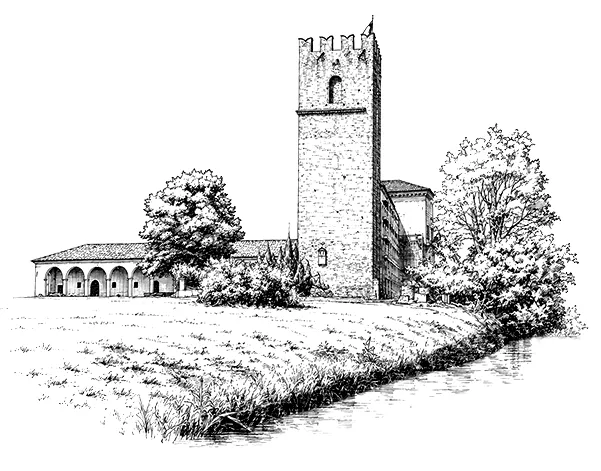
A story that unfolds just a few metres from the River Adige, in the rural heart of the Polesine.
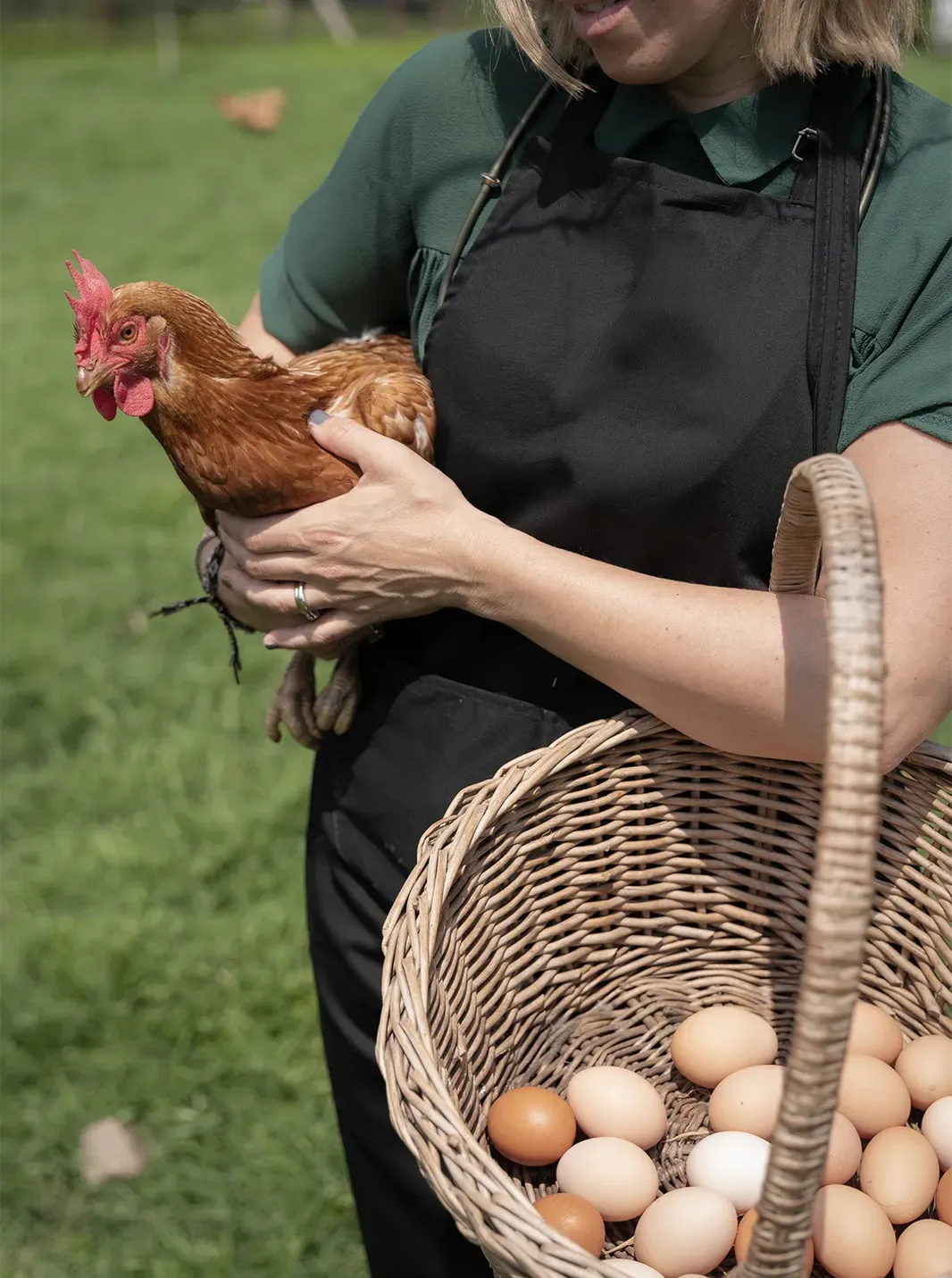
For generations, this land has been shaped by hard work and harvests. Once a place devoted solely to farming, today it has evolved into something more: we’ve opened the doors of Corte, creating a place where nature isn’t simply admired, but truly lived.
FIRST AND FOREMOST,
A NATURAL RETREAT
THE POLESINE
There is a raw beauty to this landscape, shaped by river sediments and generations of resilience. Choosing the Polesine was a conscious decision: a place where the noise of everyday life fades away, making space for focus, stillness and new perspectives.
THE WOODLAND THAT SURROUNDS CORTE CAREZZABELLA
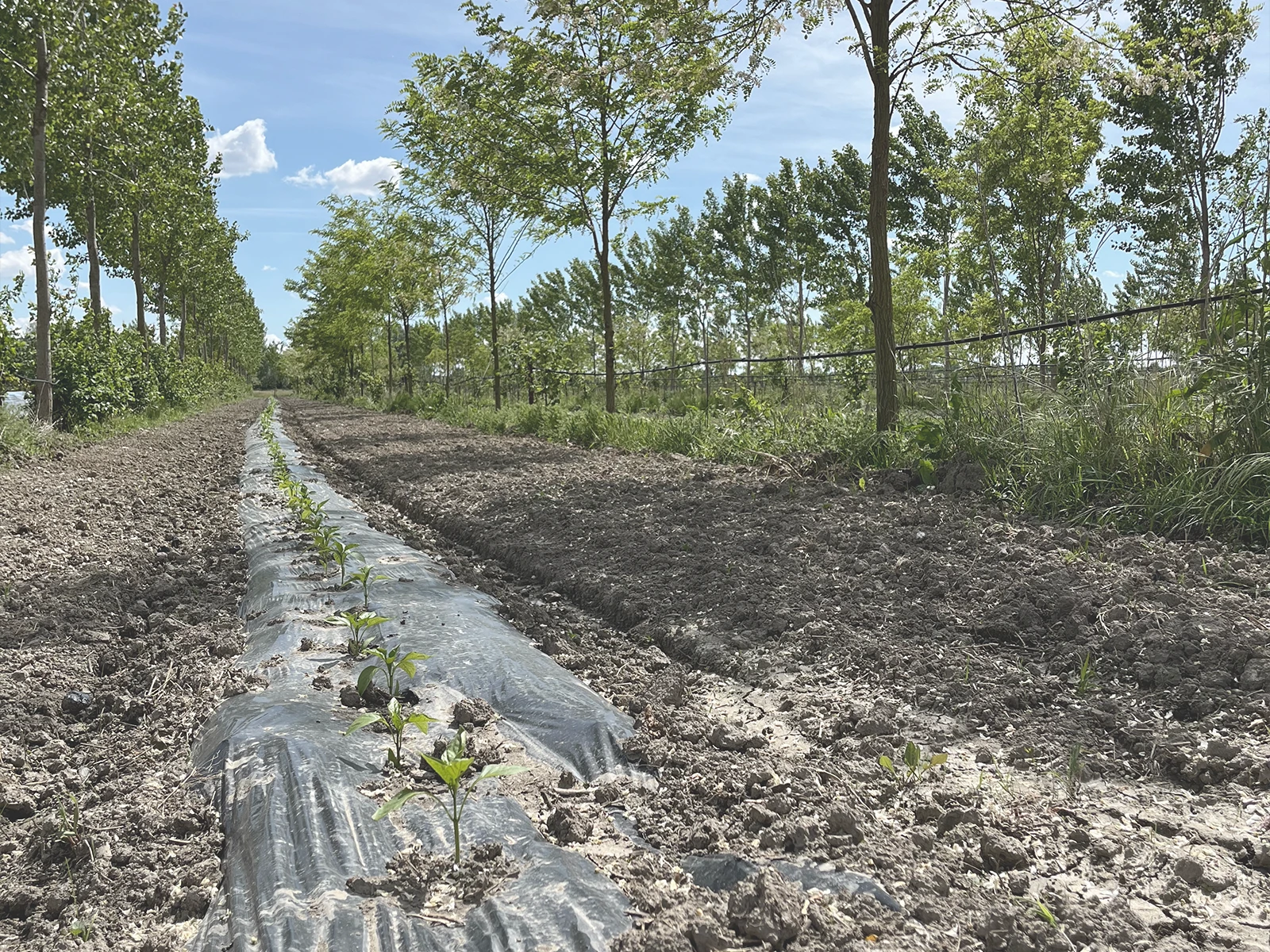
We have chosen to give more space back to nature by planting over 5,000 native trees and shrubs along our fields and boundaries.
More than an agroforestry project, it is a long-term commitment to biodiversity, to our land and to the generations that will come after us.
RESPECT
Far from the rush of modern life, we let nature set the pace, allowing every fruit to ripen in its own time.
PATIENCE
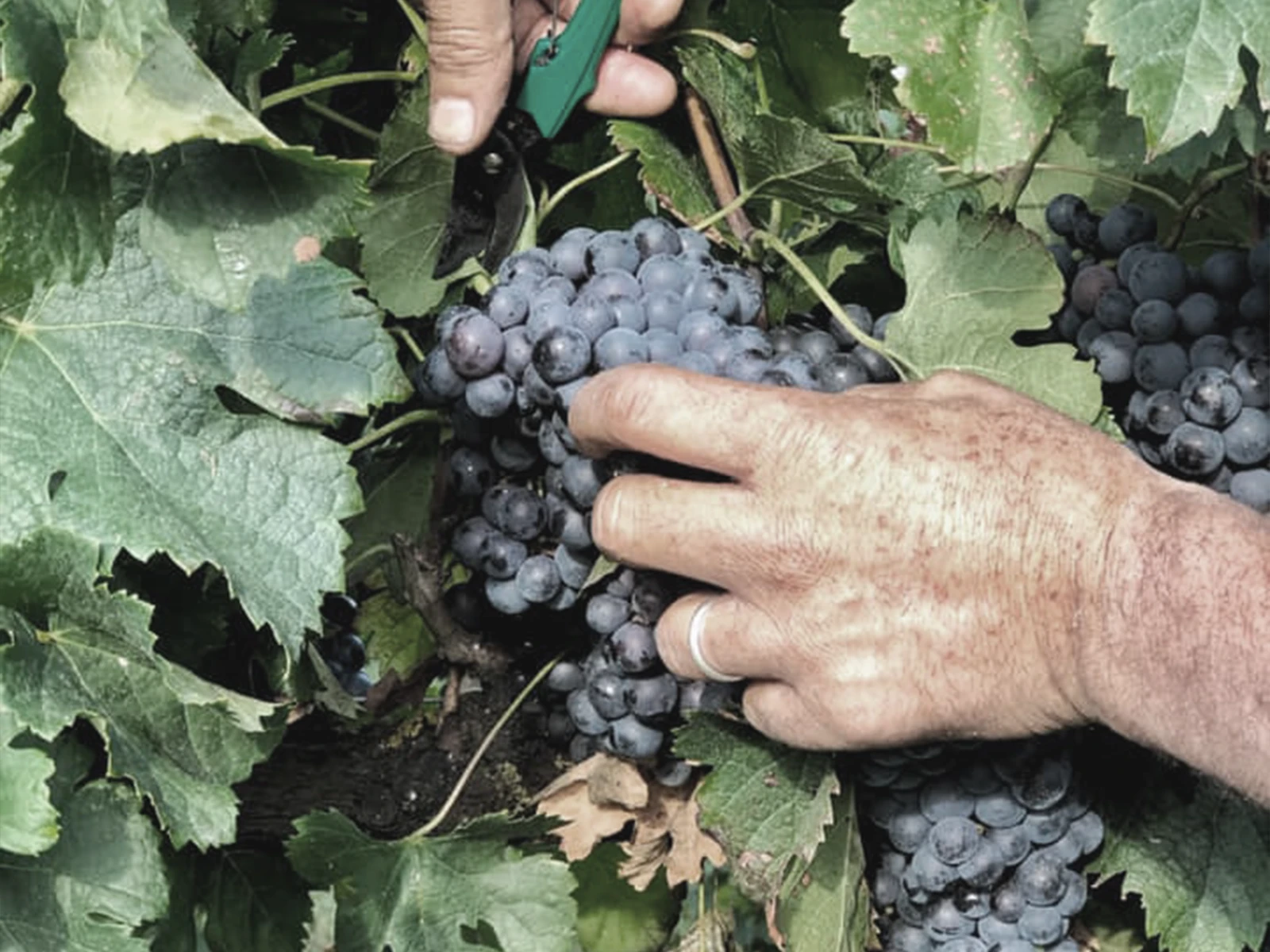
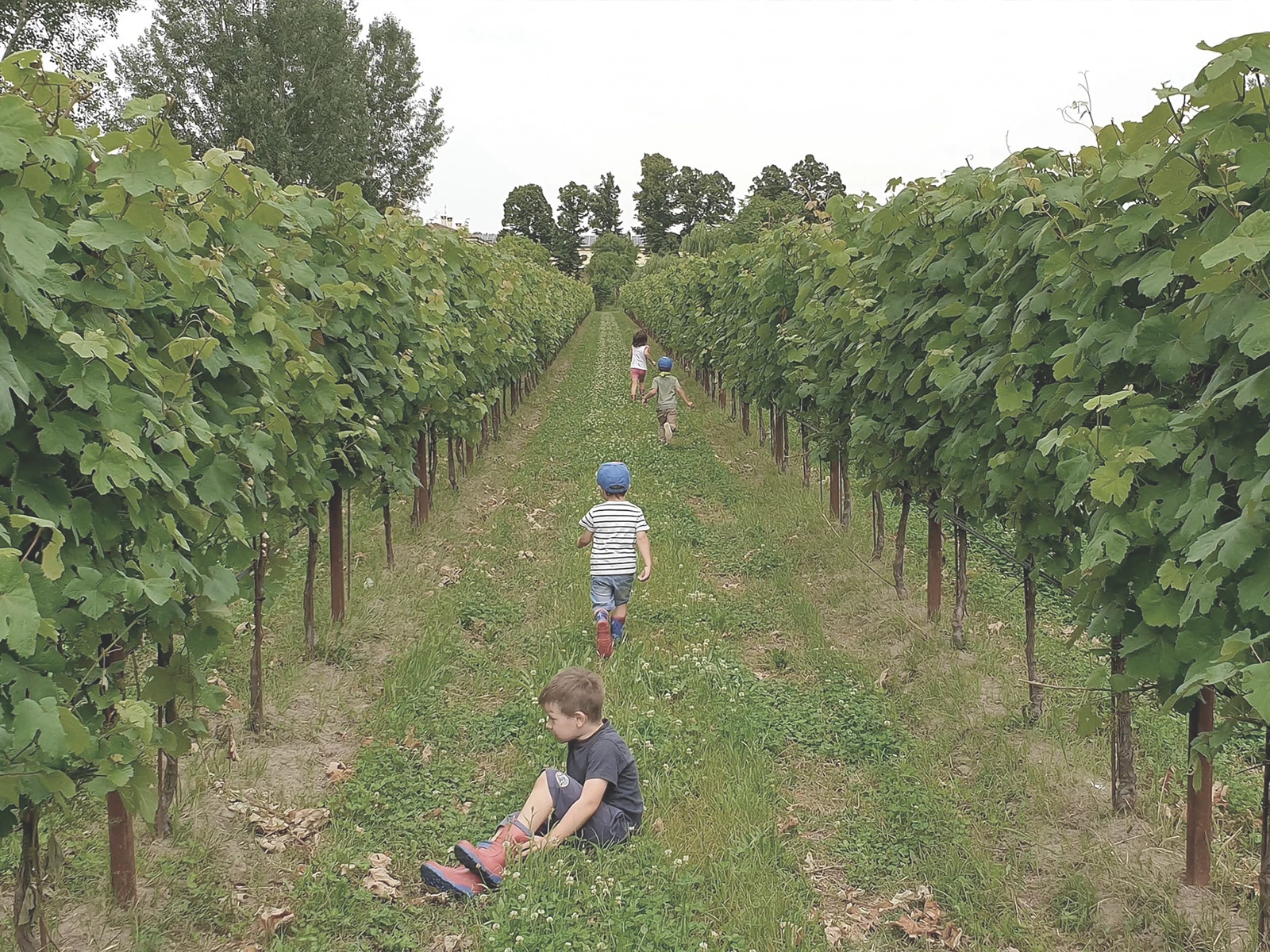
We are bringing forgotten local grape varieties, such as Turchetta and Mattarella, back to life, preserving flavours that were almost lost among the sandy soils of the Polesine.
CARE
Care is part of everything we do. It goes beyond the harvest, shaping a landscape that is balanced, welcoming and alive.
The name Carezzabella comes from a transcription mistake on old cadastral maps. The original dialect name, Carezà Bela—meaning “beautiful country path”—was mistakenly written as a single word.
What was once an error has become part of our identity, and today we like to think of it as a fitting symbol of welcome.
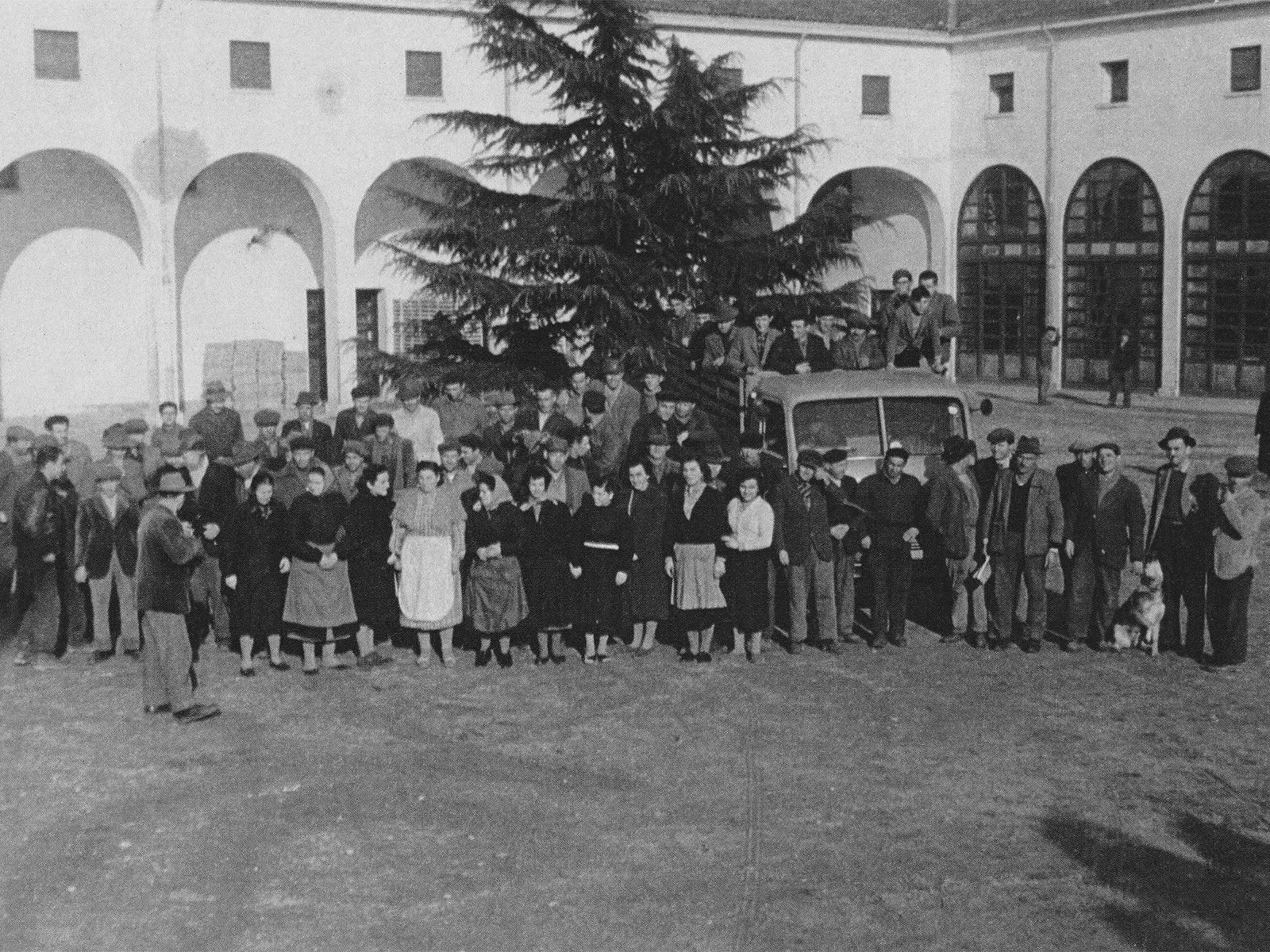
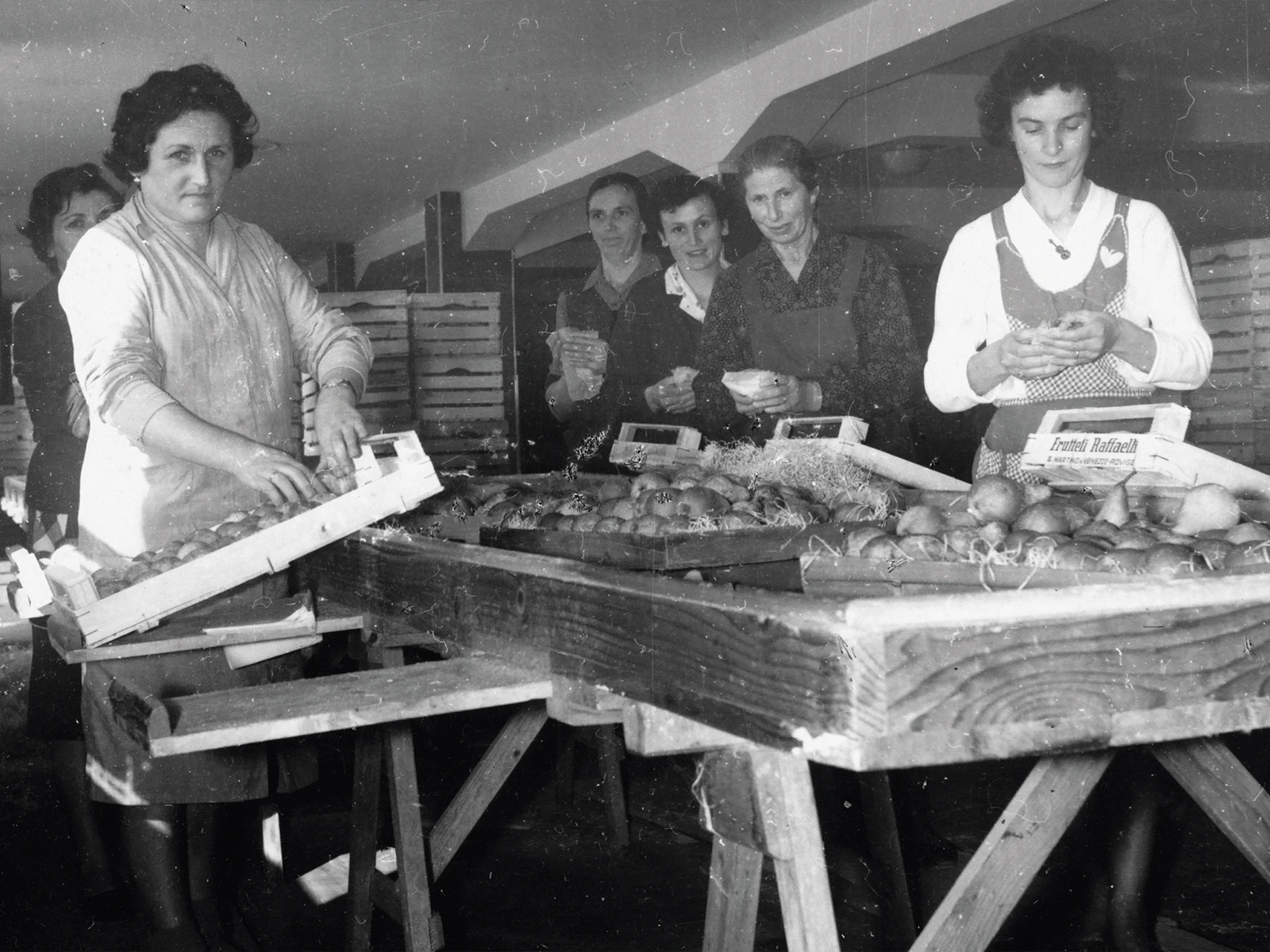
The Raffaelli family’s farm was founded. From the very beginning, the shop became the heart of fruit growing in the Polesine region: a hub that welcomed and provided employment for local families.
Corte grows into an important fruit collection and trading centre, supplying markets across Europe.
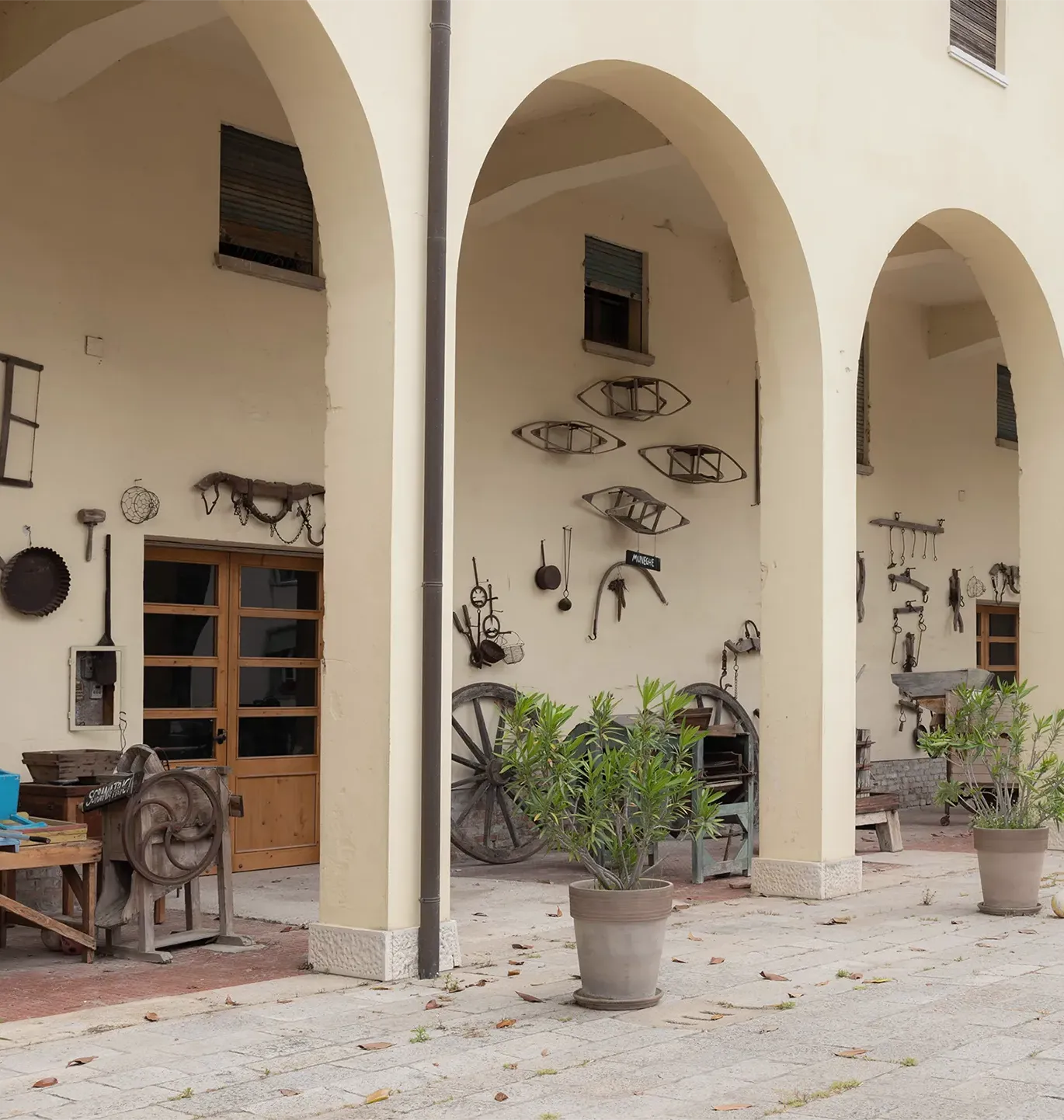
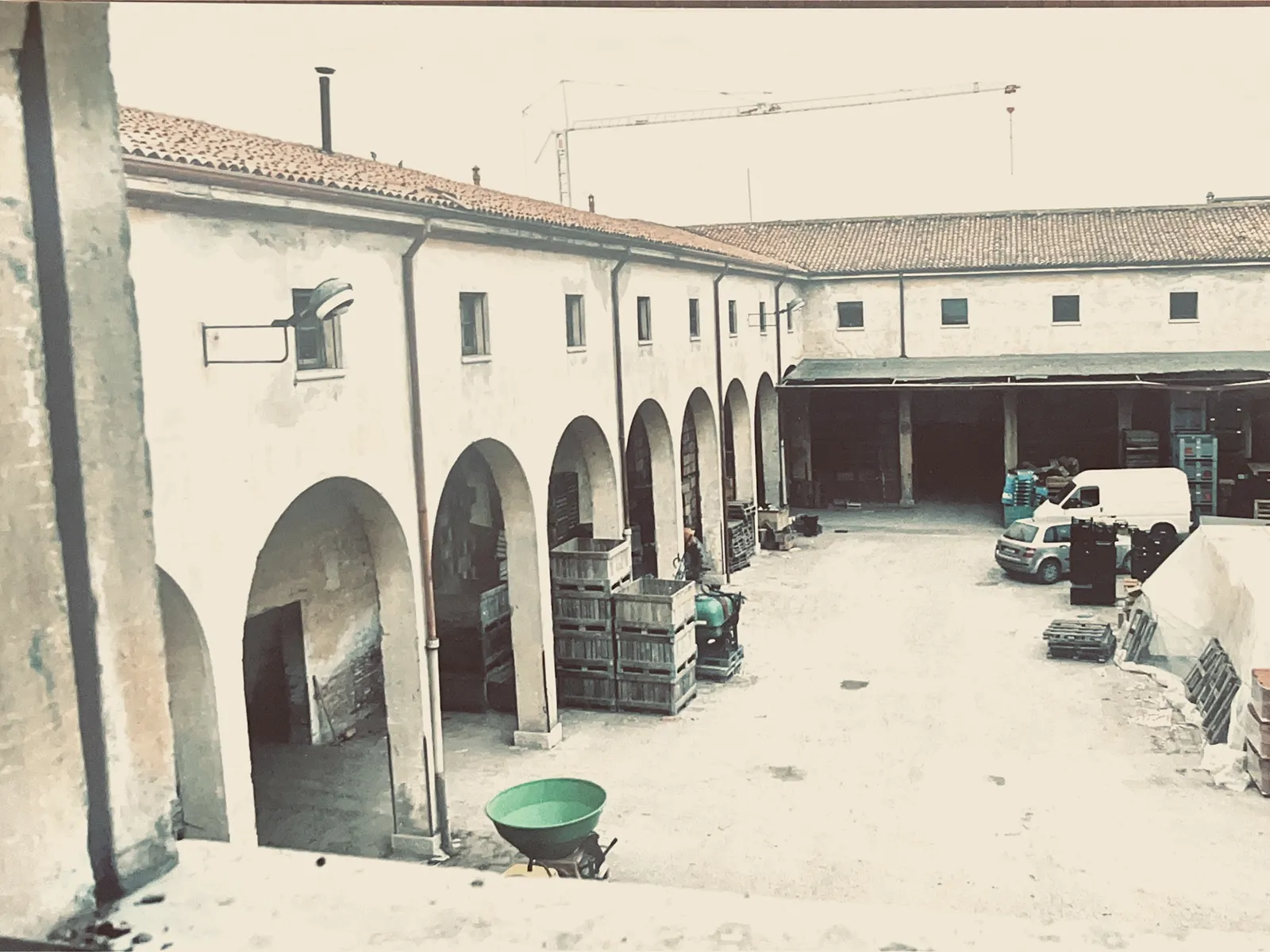
Giuseppe, our father, acquires the Raffaelli family’s estate and begins a careful process of restoration. Reclaimed bricks and neglected buildings are brought back to life, laying the foundations for the Corte Carezzabella you see today.
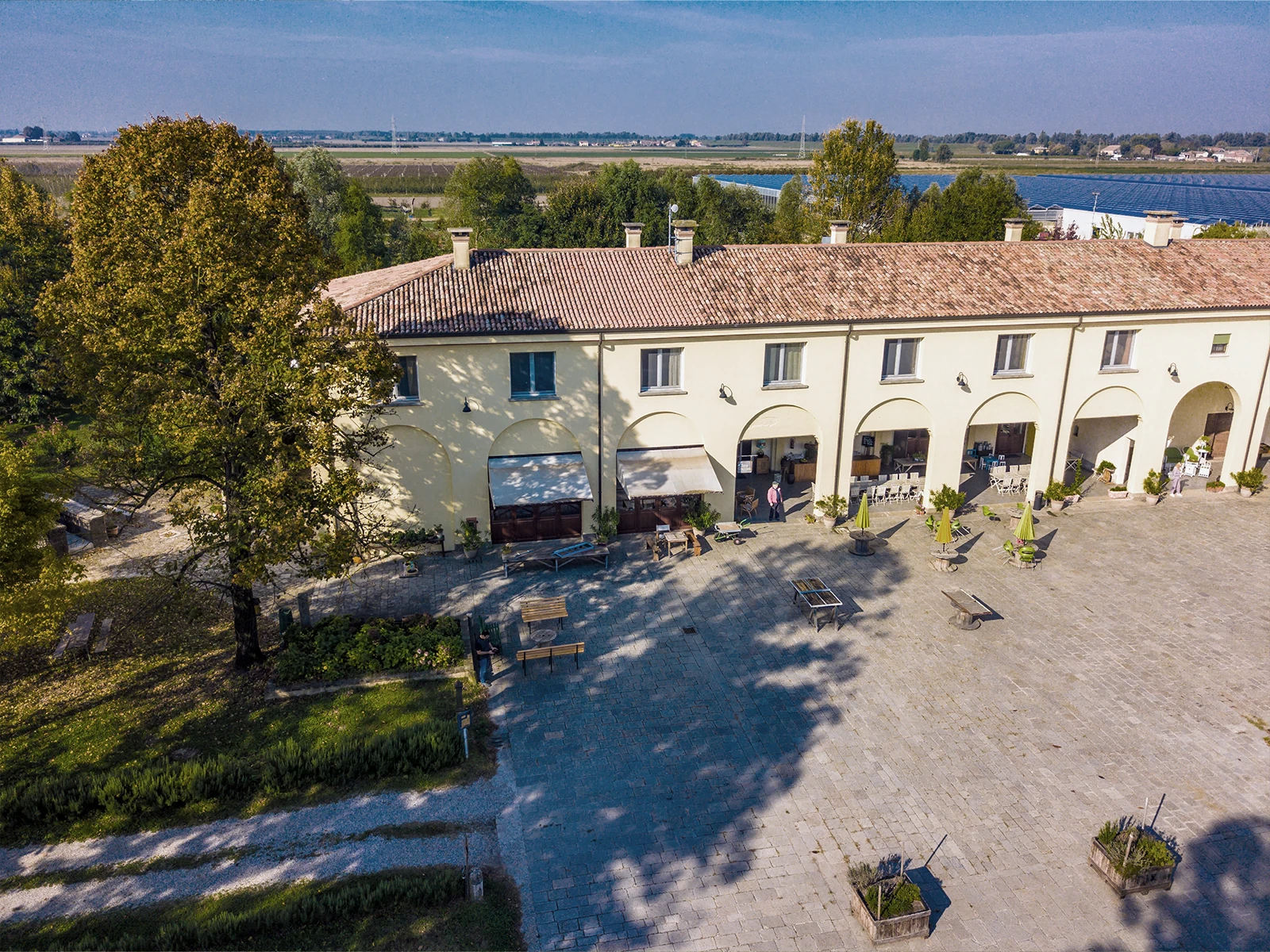
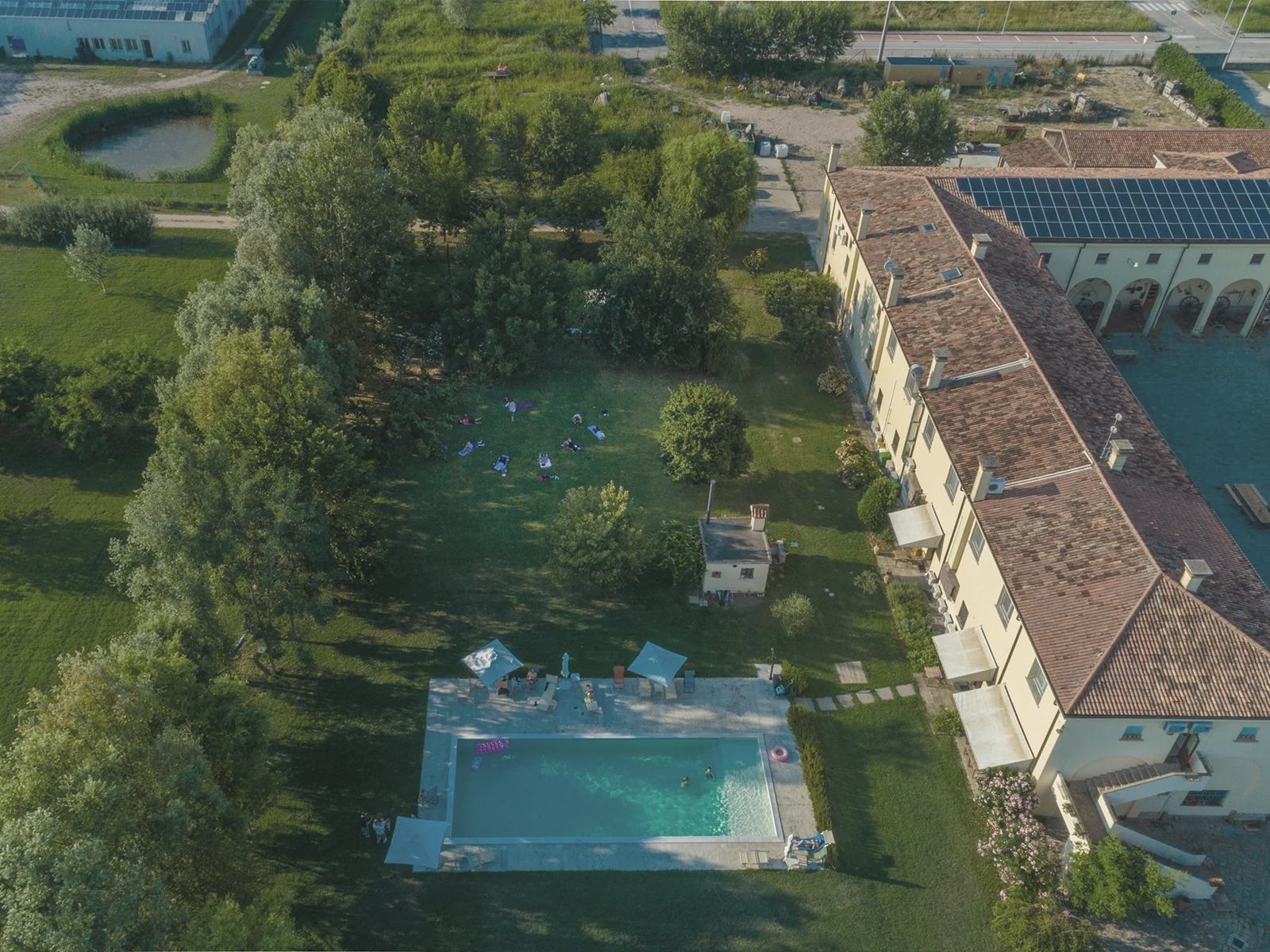
The west wing is restored and Corte officially opens its doors to guests, becoming a place of hospitality, encounters and shared experiences.
The farm embraces new possibilities. Our Educational Farm is established, and we bottle our very first wine, produced from historic vineyards first planted in the 1950s.
Corte strengthens its commitment to nature. We achieve organic certification and plant more than 5,000 native trees, making biodiversity a central part of everything we do.
With the opening of Cresco Fuori, our outdoor nursery school, Corte welcomes its youngest visitors, becoming a living classroom where children learn directly from nature.
The restoration of the winery and the ground floor of the north wing marks a new chapter for Corte Carezzabella, giving renewed purpose, harmony and life to every corner of the estate.
PERSONE CHE FANNO LA CORTE
La Corte ha il passo di chi la vive. Si vede nella terra lavorata, nel calore di un benvenuto, nel tempo dedicato a chi cresce tra i nostri campi. Qui le competenze si mescolano al sudore e alla cura, per tenere in piedi un’idea di agricoltura che è, prima di tutto, la nostra vita.
Bringing the quality wines produced by the Family to the world.
A true pioneer, the first to believe in the potential of Armenia’s wine on a world stage and determined to put Armenia on a very high level from the very start, for over a decade Zorik, together with his wife Yeraz, focused on reviving the dormant wine industry of the country.
He started planting and teaching locals how to work the vineyards while at the same time instilling the idea to the people that Armenia could produce, not only excellent wines, but also unique wines from its native grape varieties debunking the general mind-set of winegrowers at the time that Armenia should follow the path of international varietals.
Bringing the quality wines produced by the Family to the world.
A true pioneer, the first to believe in the potential of Armenia’s wine on a world stage and determined to put Armenia on a very high level from the very start, for over a decade Zorik, together with his wife Yeraz, focused on reviving the dormant wine industry of the country.
He started planting and teaching locals how to work the vineyards while at the same time instilling the idea to the people that Armenia could produce, not only excellent wines, but also unique wines from its native grape varieties debunking the general mind-set of winegrowers at the time that Armenia should follow the path of international varietals.
Bringing the quality wines produced by the Family to the world.
A true pioneer, the first to believe in the potential of Armenia’s wine on a world stage and determined to put Armenia on a very high level from the very start, for over a decade Zorik, together with his wife Yeraz, focused on reviving the dormant wine industry of the country.
He started planting and teaching locals how to work the vineyards while at the same time instilling the idea to the people that Armenia could produce, not only excellent wines, but also unique wines from its native grape varieties debunking the general mind-set of winegrowers at the time that Armenia should follow the path of international varietals.
Bringing the quality wines produced by the Family to the world.
A true pioneer, the first to believe in the potential of Armenia’s wine on a world stage and determined to put Armenia on a very high level from the very start, for over a decade Zorik, together with his wife Yeraz, focused on reviving the dormant wine industry of the country.
He started planting and teaching locals how to work the vineyards while at the same time instilling the idea to the people that Armenia could produce, not only excellent wines, but also unique wines from its native grape varieties debunking the general mind-set of winegrowers at the time that Armenia should follow the path of international varietals.